Siem Reap Cooking Class at Baitang Siem Reap
This isn't your standard hotel cooking demo where someone else does most of the work while you watch.
You start at a real village market at 9:45 AM, picking through fish that were swimming in the Mekong hours ago. Vendors bundle herbs with banana leaves. Palm sugar sits in clay pots. Your chef shows you which lemongrass stalks are fresh, why those coconuts make better milk, and what that fermented fish paste (prahok) actually does for Khmer cooking.
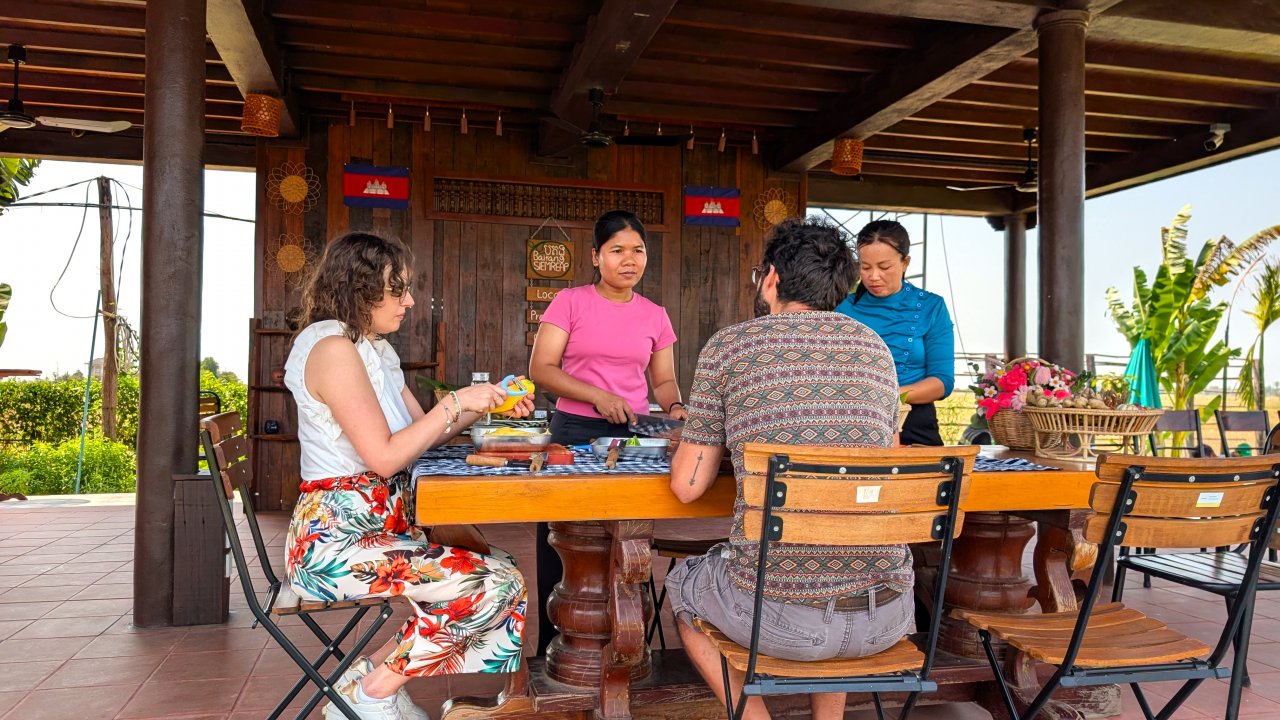
Then comes Baitang Siem Reap. The cooking pavilion sits right among working rice fields. Farmers walk past on their way to work. Water buffalo graze nearby. You prepare Fish Amok, Beef Lok Lak, fresh spring rolls, and seasonal fruit dessert while the countryside stretches out in front of you. Every ingredient came from within a few kilometers. The chef teaching you learned these recipes from her mother.
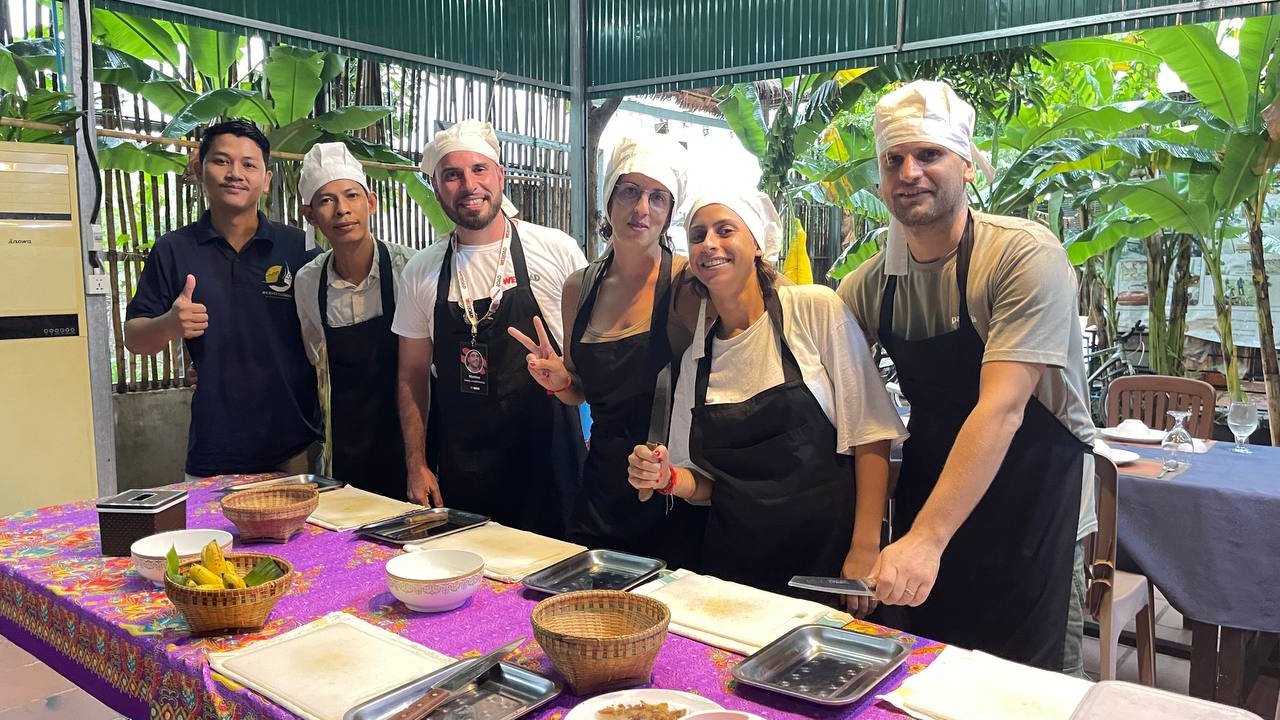
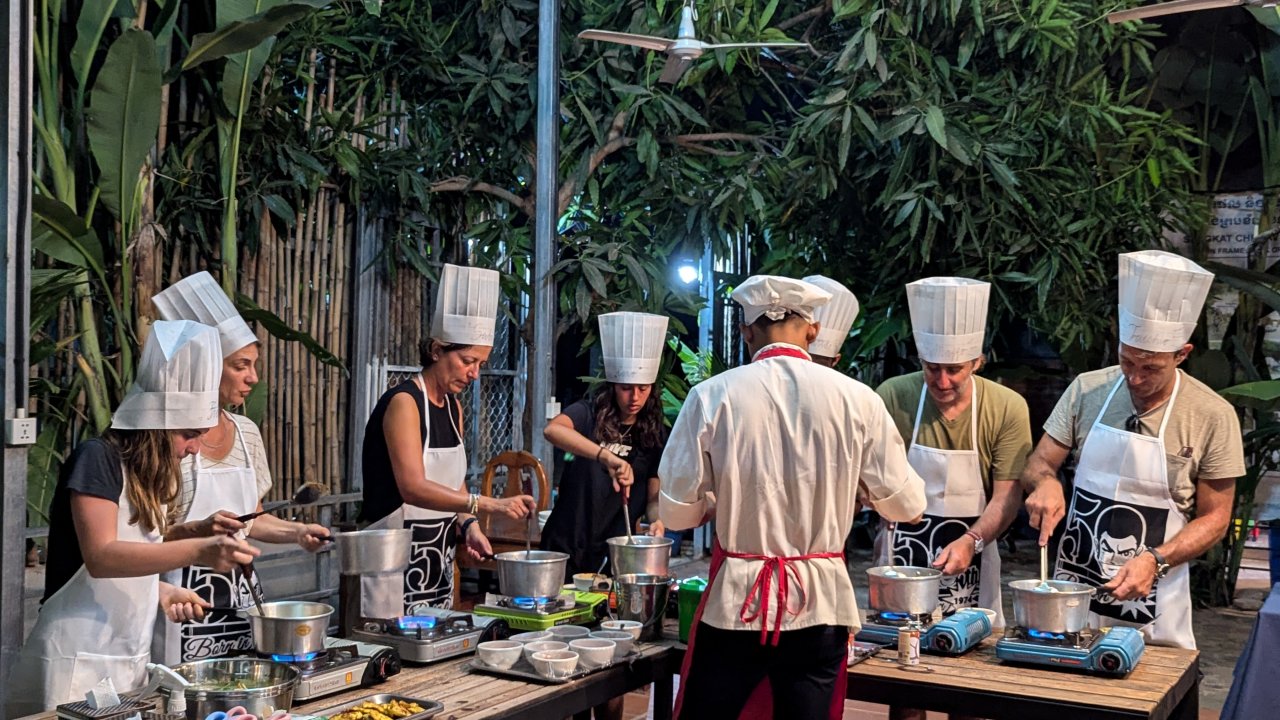
Small groups mean you're not elbowing for counter space or straining to hear instructions. You pound curry paste in a stone mortar. Fold banana leaves around fish. Adjust the lime-pepper sauce until it hits all four notes just right.
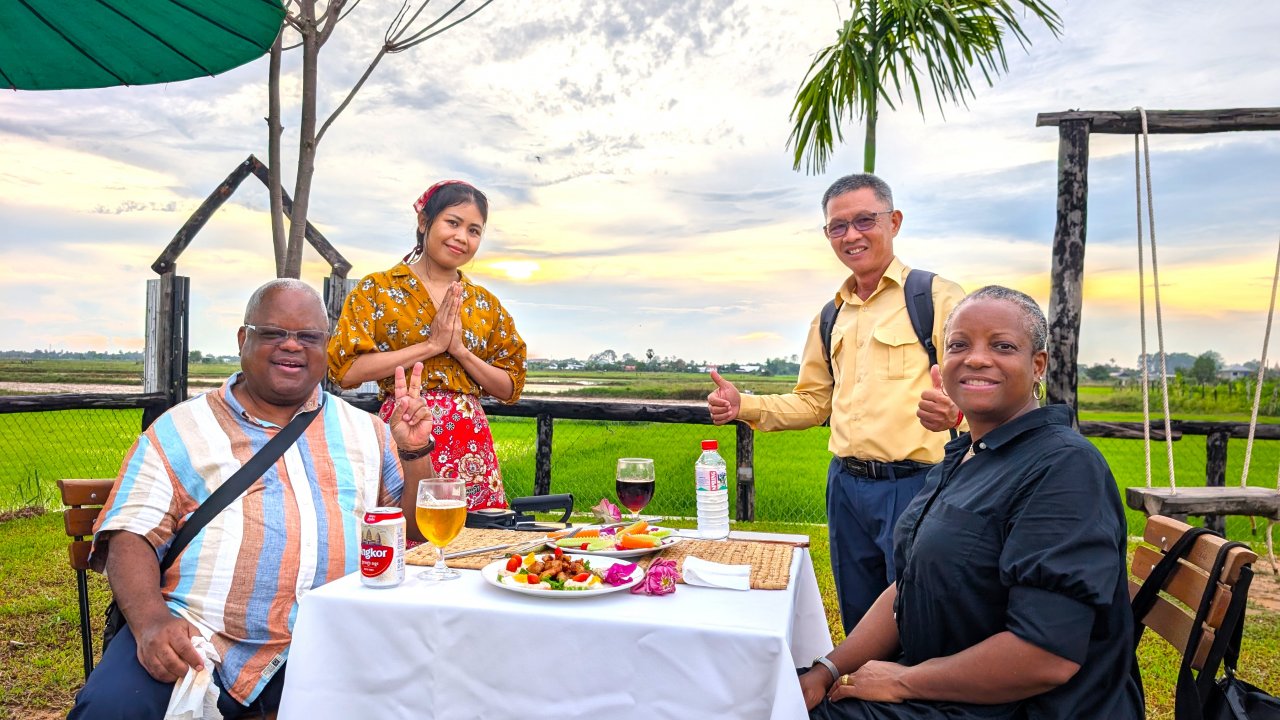
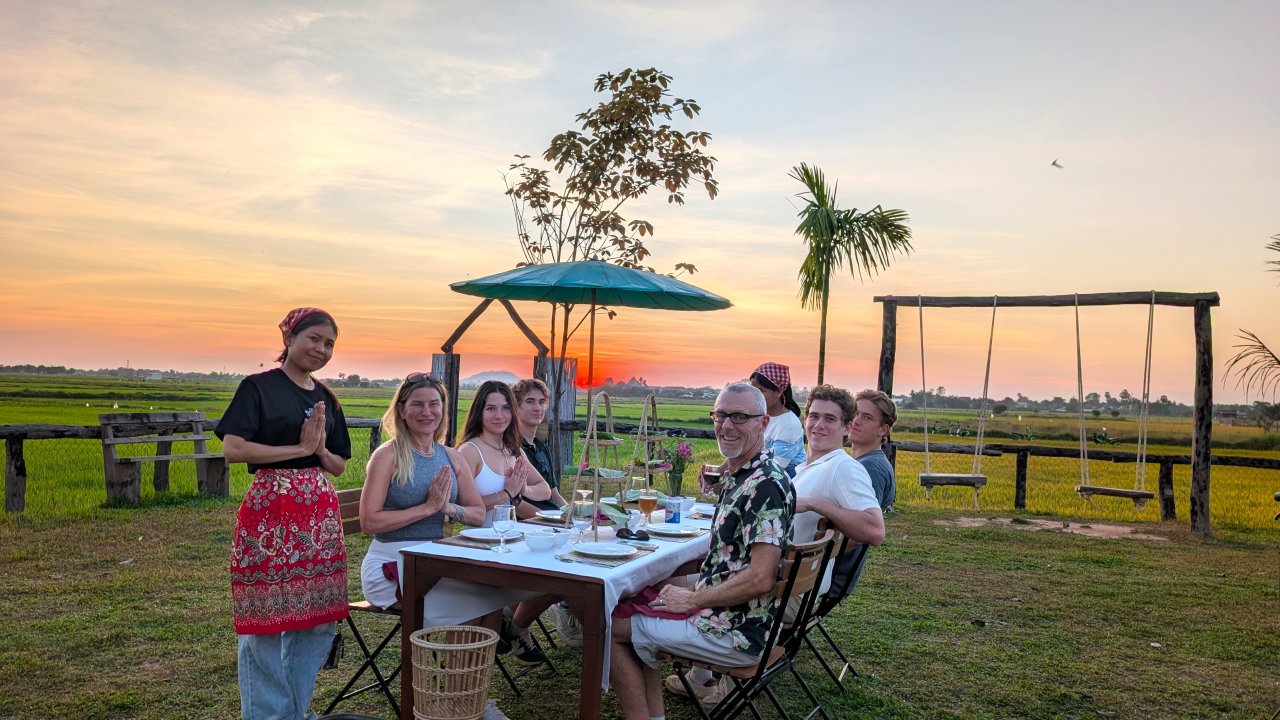
When everything's ready, you sit down at tables facing the paddies and eat what you made. The light turns golden. Farmers cycle home. Birds call across the fields. Recipe cards go home with you, along with the chef's contact information for when you try to recreate everything in your own kitchen.
Round-trip transport from any Siem Reap hotel is included. So is the market tour, all ingredients, and lunch. You don't need cooking experience. Just show up hungry and ready to learn.
Learn to Cook Real Khmer Food in a Village Kitchen Surrounded by Rice Fields
Most cooking classes in Siem Reap happen in air-conditioned rooms near Old Market. You chop pre-measured ingredients, follow a recipe someone else wrote out, take a few photos, and call it cultural immersion.
This one works differently.
At 9:00 AM, you leave the city behind. Your driver heads past temple traffic and into actual countryside where stilted houses line red dirt roads. By 9:15 AM, you're walking through a farmer's home in Chreav Village. Kids wave from hammocks. Chickens scatter. The air smells like wood smoke and lemongrass. This isn't a "cultural village" built for tourists... it's just where people live.
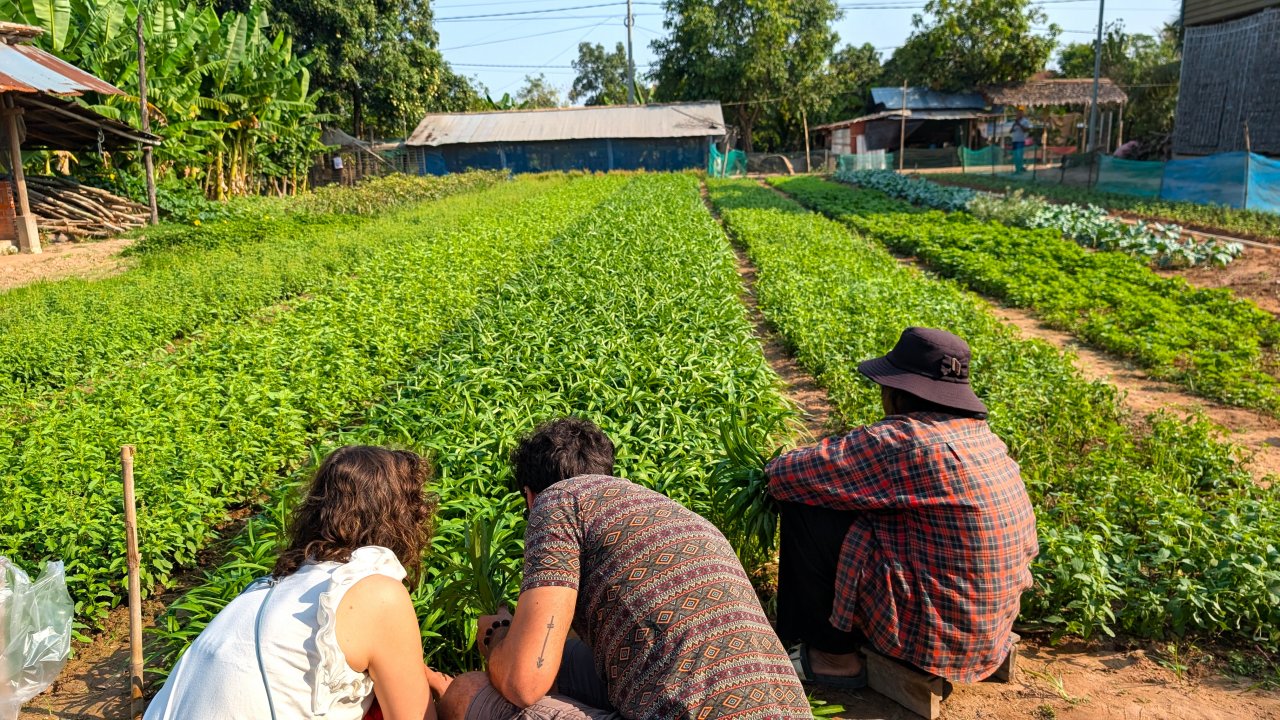
Then the market. Not the clean, organized stalls you see in guidebooks. The real village market where locals shop for dinner. Fish still moving in buckets. Herbs cut that morning. Vegetables with dirt still on them. Your chef explains each ingredient: galangal versus ginger, kaffir lime leaves, morning glory, those tiny green eggplants that go into curries. You select everything together, learning what "fresh" actually means in Cambodian cooking.
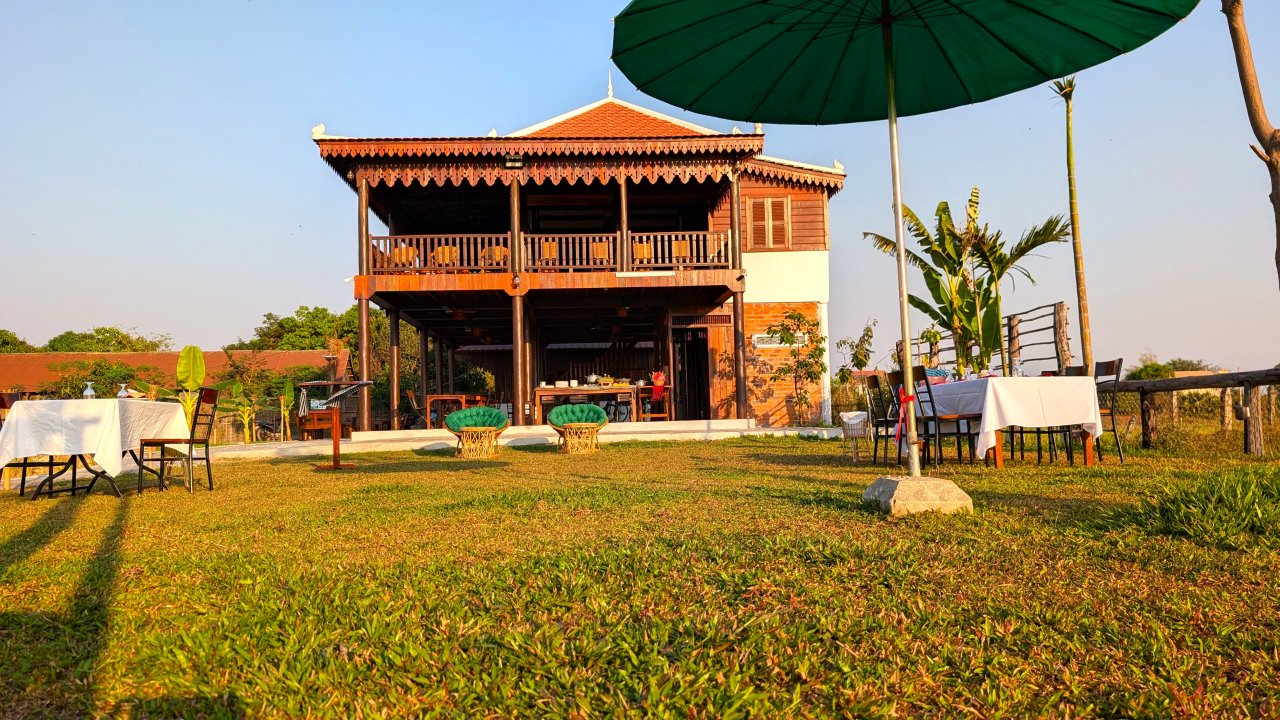
Baitang Siem Reap appears across green fields around 10:30 AM. Traditional wooden pavilion, open sides, thatched roof. Rice paddies stretch to the horizon. Your cooking station is set up, but nothing's pre-prepped because that would defeat the entire purpose. You're going to do this properly, from scratch, the way Khmer families have been doing it for centuries.
The chef who teaches you? She grew up making these dishes. Her mother taught her. Her grandmother taught her mother. That knowledge doesn't come from culinary school textbooks or YouTube videos. It comes from repetition, correction, and the kind of muscle memory you develop when you've been wrapping Fish Amok in banana leaves since you were eight years old.
You prepare three courses. Starter: fresh spring rolls with that addictive peanut sauce. Mains: Beef Lok Lak with lime-pepper dipping sauce, and Fish Amok steamed in banana leaves. Dessert: seasonal tropical fruit. Every technique gets demonstrated twice. Then you do it while the chef watches and corrects your knife angle, your heat level, your timing.
When everything's ready, tables wait outside with white cloths and place settings. You eat what you cooked while the sun peaks over the paddies. A breeze comes through. Somewhere nearby, a farmer calls to his buffalo. This is farm-to-table cooking in its truest form... and probably the best lunch you'll have in Southeast Asia.
You head back to Siem Reap around 1:00 PM with recipe cards, a full stomach, and your chef's contact information for when you inevitably have questions later. Half your day just taught you more about Cambodian food than most people learn in a week of restaurant visits.
What You Will Do
9:00 AM – Hotel Pickup
Your day starts wherever you're staying in Siem Reap. The drive takes about 20 minutes, long enough to watch buildings give way to palm trees and pavement turn to red dirt roads. You're heading to Chreav Village, where most tourists don't go.
9:15 AM – Traditional Market Experience
The market tour wakes up all your senses. Vendors sell fish caught that morning, herbs cut an hour ago, vegetables covered in actual dirt. Your chef explains everything: kaffir lime leaves, galangal (looks like ginger but tastes completely different), prahok (fermented fish paste that gives Khmer cuisine its distinctive flavor).
You select ingredients together. She shows you how to tell if lemongrass is fresh, which coconuts make the best milk, why that particular bundle of morning glory is better than the one next to it. You learn to shop like a local instead of pointing at things you can't identify.
9:40 AM – Village Visit and Farmer Home Tour
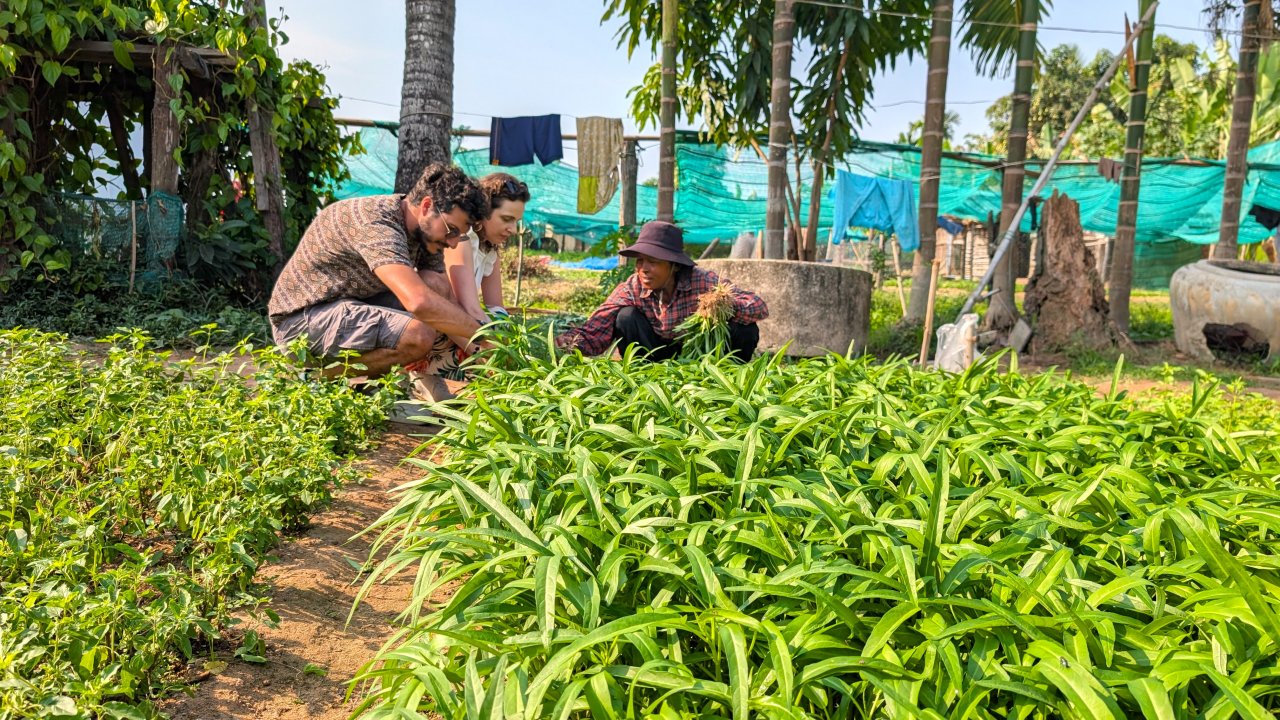
First stop is a real farming household. Not a staged "cultural village" with performances and souvenir shops. Just a family who's lived here for three generations. You see where they dry rice, store tools, and go about normal morning routines. Kids might be doing homework. Grandmother might be weaving baskets. Chickens definitely scatter when you walk past.
This part matters because it shows you where the food comes from. These are the people who grow what you're about to cook.
10:20 AM – Arrival at Baitang Siem Reap
The cooking pavilion appears across green fields. Traditional wooden architecture, open sides, thatched roof. Stations are set up with cutting boards, mortars and pestles, clay pots. Everything you need is laid out, but nothing's pre-prepped. You're going to do this from scratch.
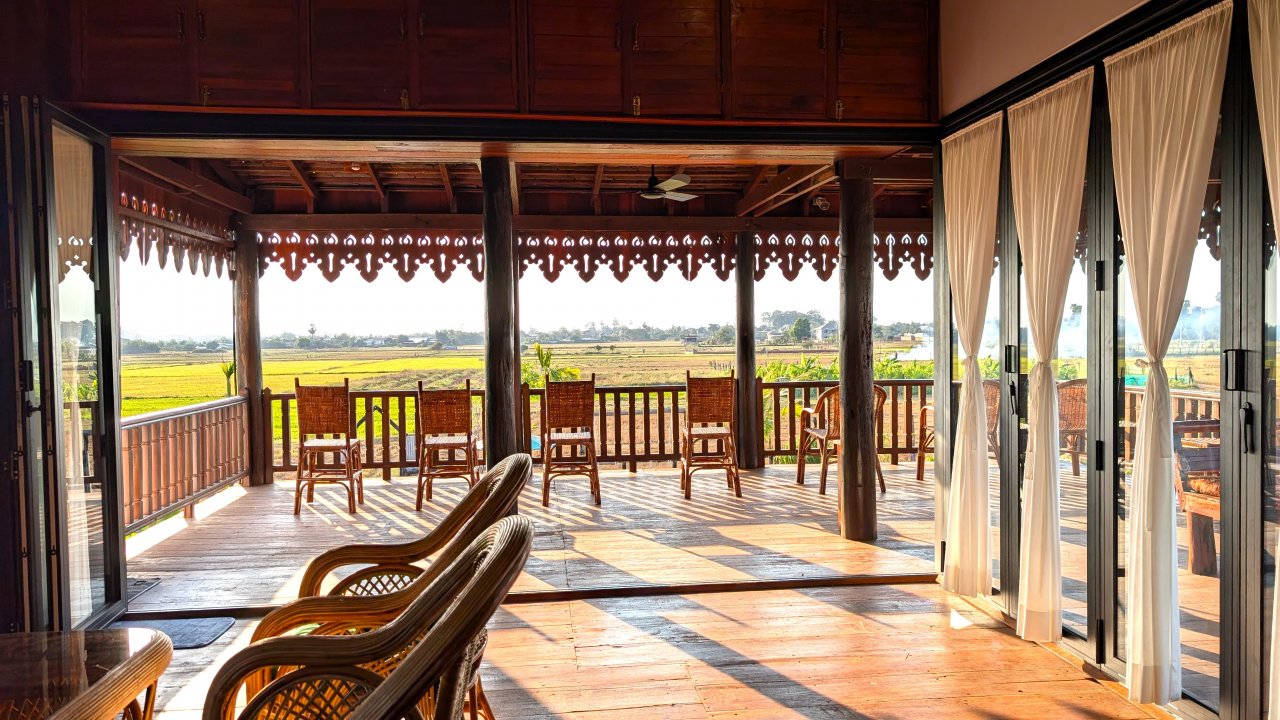
The setting alone is worth the trip. Rice paddies stretch in every direction. Farmers work in the distance. Water buffalo graze nearby. You can actually see where your ingredients grew.
10:30 AM – Hands-On Cooking Instruction
Now the real work starts. Your chef demonstrates each technique twice, then watches while you do it. She corrects your knife angle when chopping herbs. Shows you the exact moment to add coconut milk so the curry doesn't split. Explains why banana leaves get passed over flame before folding.
You prepare three courses:
Starter: Fresh Spring Rolls
Rice paper soaks in water but not too long or it tears. The filling goes in a specific order: rice noodles first, then herbs, then shrimp or tofu. Rolling takes practice. Your first one probably looks rough. By the third, you've got the technique down. The sweet and sour peanut sauce recipe is 50 years old, passed down through the chef's family. She shows you the exact ratio of tamarind, palm sugar, and crushed peanuts that makes it work.
Main Course 1: Beef Lok Lak
This dish requires high heat and quick hands. Beef marinates in oyster sauce, soy sauce, and palm sugar. Vegetables must stay crisp, not soggy. The lime-pepper dipping sauce (the real star of this dish) needs balancing: salty, sour, spicy, sweet. You taste and adjust until all four notes hit right. Most restaurants serve a watered-down version. You're learning the authentic recipe.
Main Course 2: Fish Amok
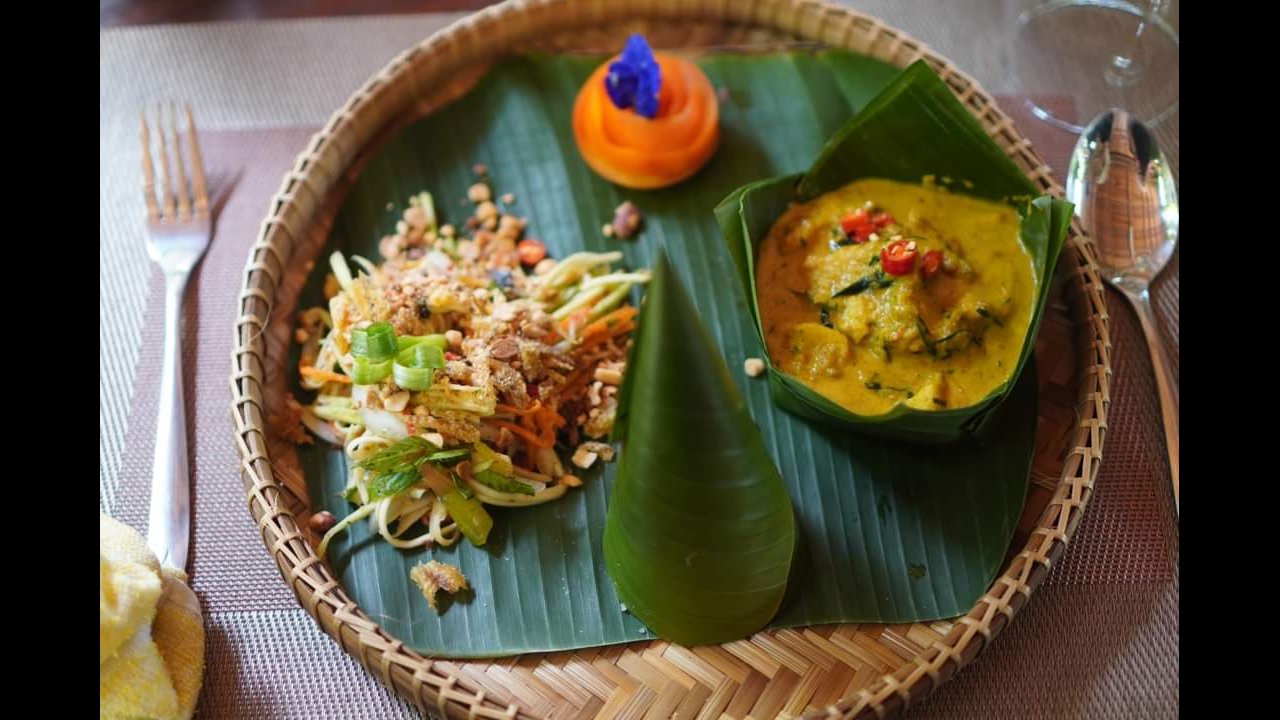
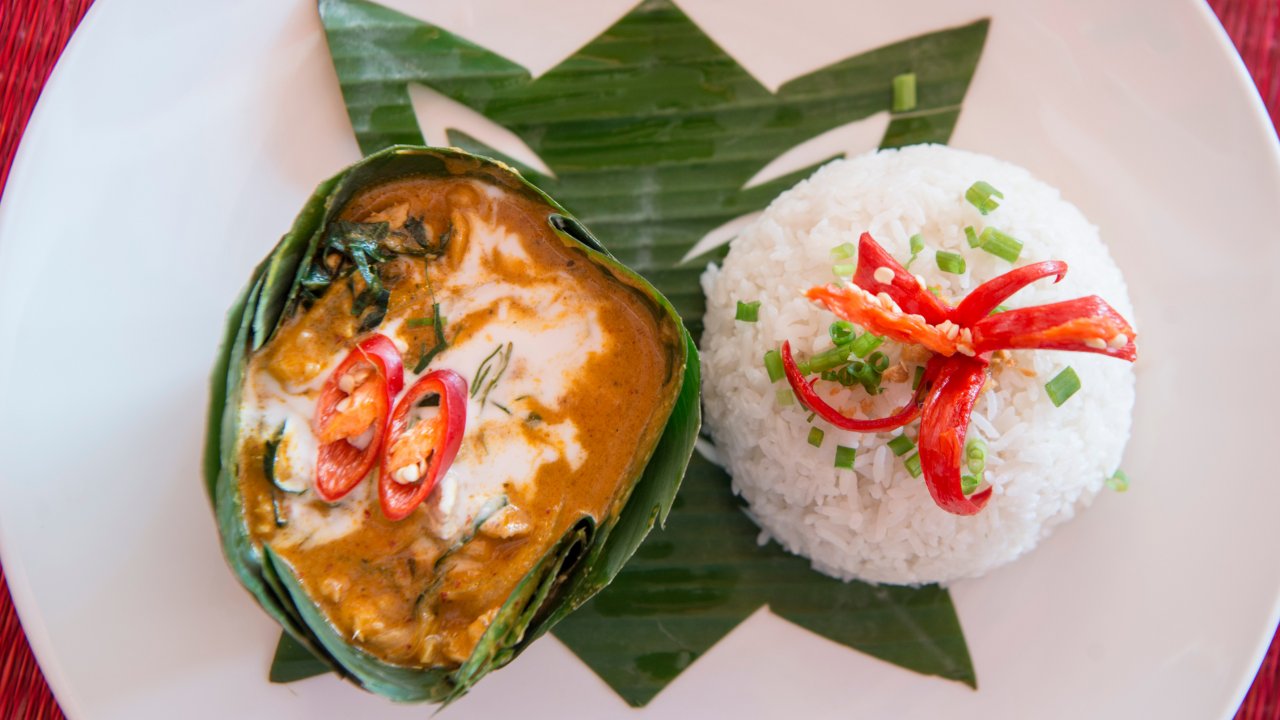
Cambodia's most famous dish. You make curry paste from scratch: lemongrass, galangal, turmeric, kaffir lime, garlic, shallots, chili. Everything gets pounded in a stone mortar. No food processor. No shortcuts. Your arm might get tired, but this is how it's supposed to be done.
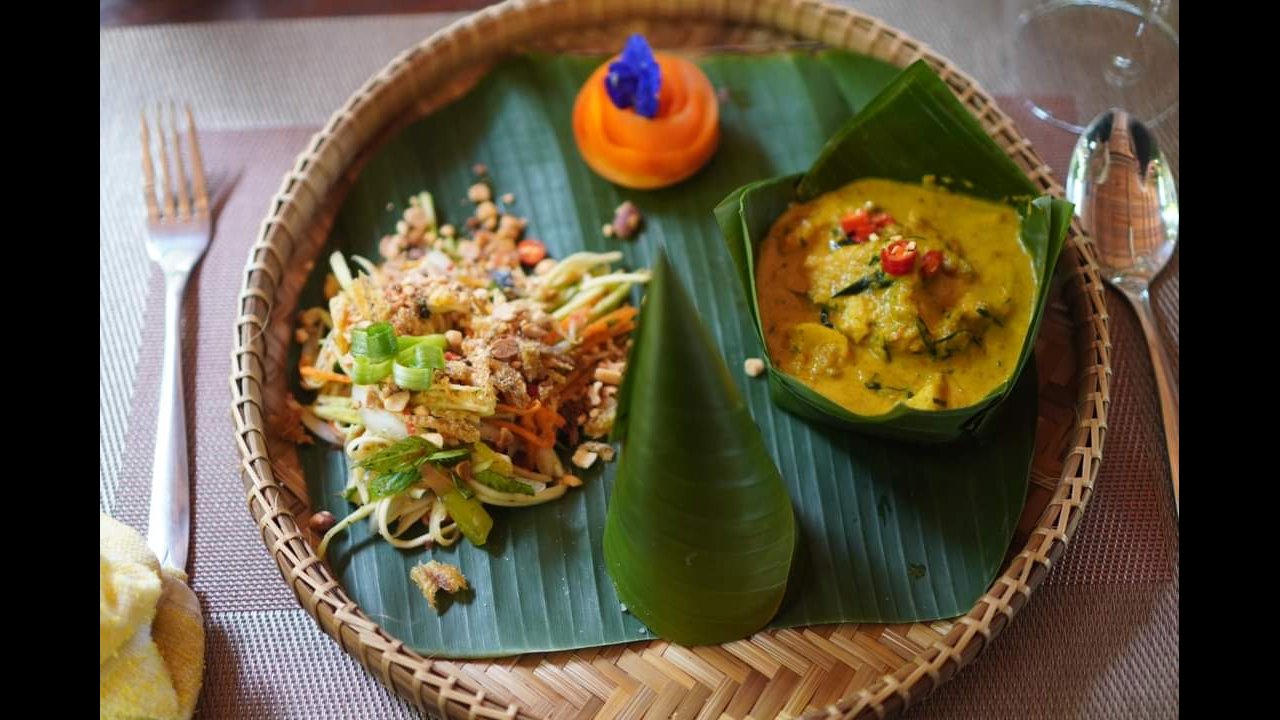
Fresh fish pieces mix with coconut milk and the paste, then everything gets wrapped in banana leaves and steamed. The kitchen fills with aroma that makes waiting difficult. When you unwrap those leaves 20 minutes later and see the perfect custard texture... that's when you understand why Fish Amok appears on every "must try" list for Cambodian food.
Dessert: Seasonal Tropical Fruits
Fresh mango, dragon fruit, rambutan (whatever's in season), cut and served with lime from the village orchard. Simple but perfect after rich curries. Cambodian meals often end with fruit instead of heavy sweets. It cleanses the palate and doesn't leave you uncomfortably full.
12:00 PM – Lunch in Paradise
Tables wait outside with white cloths and place settings. You sit down to eat everything you just created. The sun peaks, making the rice fields glow. A breeze comes through. Somewhere nearby, a farmer calls to his buffalo.
You're eating traditional dishes in the exact place they originated, cooked with techniques unchanged for centuries. Every bite tastes better because you know exactly what went into it. You pounded that curry paste. You adjusted that lime-pepper sauce. You wrapped those banana leaves.
1:00 PM – Return to Hotel
Full, satisfied, and armed with recipe cards plus your chef's contact info, you head back to Siem Reap. Half your day gave you more food knowledge than most people get in a week of temple visits.
Itinerary
9:00 AM – Pickup from your Siem Reap hotel or guesthouse
9:15 AM – Traditional market tour and ingredient shopping
9:45 AM – Village visit and farmer home tour in Chreav Village
10:20 AM – Arrival at Baitang Siem Reap cooking pavilion
10:30 AM – Hands-on cooking instruction begins (Fresh Spring Rolls, Beef Lok Lak, Fish Amok, Fruit Dessert)
12:00 PM – Lunch of everything you prepared, served outdoors with rice field views
1:00 PM – Return transport to your Siem Reap hotel
Total duration: 4 hours
Round-trip transport is included from any hotel, guesthouse, or homestay in Siem Reap. Your driver arrives at 8:50 AM and takes you straight to Chreav Village. The drive takes about 15 minutes through countryside that gets more rural as you go.
Just provide your accommodation name when booking. If you're staying somewhere unusual or outside the main hotel areas, the team will contact you to confirm the pickup location.
You return to the same location where you were picked up. Drop-off happens around 1:00 PM, giving you the rest of the afternoon for whatever else you have planned. Temples, nap, swimming pool... your schedule is yours.
If you want to be dropped somewhere else in Siem Reap (different hotel, specific restaurant, Old Market), just tell your driver during the ride back. They're flexible.
Required:
Camera or phone (you'll want photos of this setting)
Appetite (you'll be eating well)
Sunscreen (the pavilion has shade but you're outdoors)
Comfortable walking shoes (for the market visit)
Recommended:Hat or cap
Light, breathable clothing
Mosquito repellent (countryside location means bugs exist)
Small bag for your recipe cards
Transport:
Round-trip pickup and drop-off from any Siem Reap hotel or guesthouse
Instruction:
Professional English-speaking local chef instructor
Ingredients:
All ingredients for three courses (starter, two mains, dessert)
Market Tour:
Traditional market visit with ingredient shopping
Cooking:
Complete hands-on cooking instruction in all dishes
Meal:
Three-course lunch of everything you prepare
Recipes:
Printed authentic recipes to take home
Follow-Up:
Chef's contact information for questions after you leave Cambodia
Water:
Drinking water throughout the class
Equipment:
All cooking equipment and utensils
No hidden fees. The price covers everything. You don't pay extra at the market or for "premium ingredients" or any other surprise charges that some cooking schools sneak in.
- Personal expenses
- Tips for chef or driver (appreciated but not required)
- Drinks beyond water (beer, soft drinks, coffee)
- Transport outside Siem Reap city area
- Hotel accommodation
- Temple passes or other activities
Key Details
Duration: 4 hours (9:00 AM to 1:00 PM)
Group Size: Maximum 12 participants
Skill Level: Complete beginners welcome (no cooking experience needed)
Age Range: Suitable for ages 8 and above
Location: Baitang Siem Reap, Chreav Village (15 minutes from Siem Reap city)
Language: English-speaking chef instructor
Dietary Options: Vegetarian, vegan, and gluten-free available (just inform when booking)
Small groups mean you get actual attention. You're not standing at the back watching someone else do the work. You pound the curry paste. You wrap the banana leaves. You taste and adjust the sauces. Real hands-on instruction where mistakes teach you something useful.
Important notes:
Dietary Requirements:
Vegetarian, vegan, and gluten-free options are available. Just inform the team when you book. They'll adjust ingredients and recipes so you're not stuck watching while everyone else cooks the meat version.Weather:
Classes run rain or shine. The cooking pavilion has a roof, so light rain doesn't stop anything. Heavy storms might delay the market tour, but you'll still do the full cooking experience.Photography:
Feel free to take as many photos and videos as you want. The rice field setting makes everything look professional. Most people end up with their best food photos from the entire Cambodia trip.Kids:
Children 8 and above are welcome. Younger kids tend to get bored during the longer cooking parts. Teenagers usually love it, especially if they're interested in food.Group Bookings:
Booking for more than 12 people? Contact the team directly. They can arrange private classes or split larger groups across multiple pavilions.
Terms & Conditions:
- Cancel at least 24 hours before the class for a full refund. Cancel within 24 hours and you'll lose your deposit. No-shows forfeit the full amount.